

“As for us, we cannot help speaking about what we have seen and heard.” — Acts 4:20
A Child Bears Witness
As Christians, we are called to be people of truth. Bearing witness is not simply expressing an opinion. It is a sacred responsibility to testify faithfully to what we see and hear, even when doing so is uncomfortable, challenges assumptions, or comes at a personal cost.
This responsibility became especially meaningful to me during a visit to Palestine last fall with my youngest child, who was eleven at the time. She fell in love with the beauty and hospitality of Palestinian culture. She encountered the warmth, generosity, and hospitality of Palestinians.
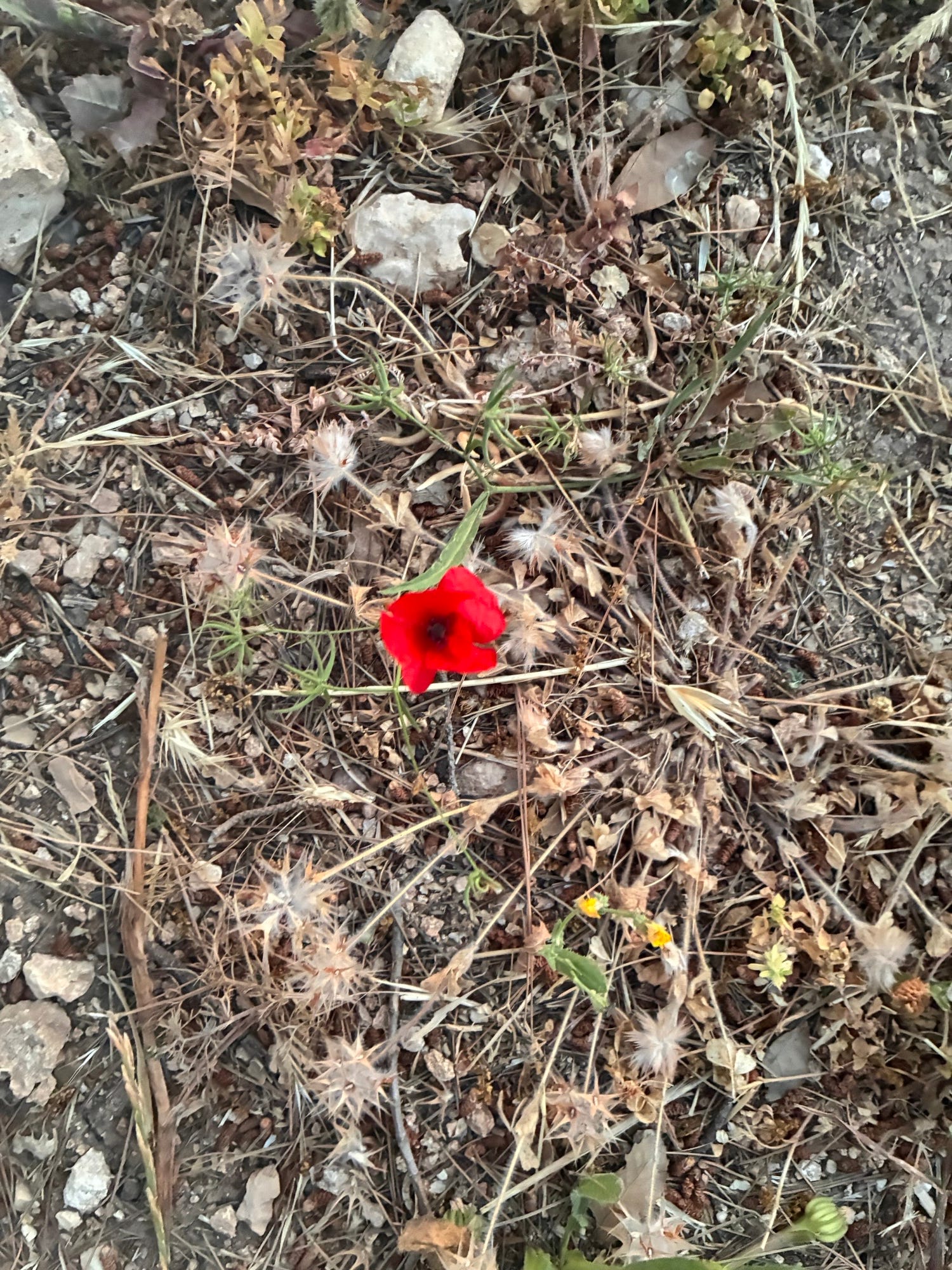
She also experienced heartbreak because of the destruction of Palestinian life she witnessed - what Palestinians endure, including villages that had been destroyed by Israeli settlers in Masafer Yatta and land and homes stolen and destroyed in Silwan. She witnessed the extraordinary work of Palestinians in Dheisheh, a refugee camp established for Palestinians displaced from their homes in 1948. At the end of our time in Palestine, we were at an Israeli checkpoint, and she observed roads reserved for Israelis that Palestinians are not permitted to use. As she tried to make sense of everything she had witnessed, she asked me why people describe Palestine and Israel as “complicated.”
Her question reminded me that I have a responsibility not only as a Christian but also as her mother. I am responsible for telling the truth about what she has witnessed, too.
Neutrality?
“Why don’t you teach about Palestine and Israel from a neutral perspective?” This is a question I frequently get when I speak to churches about Christian Zionism and Palestine. I appreciate the question as it often comes from a genuine desire to understand not only my position but also the history and context of Palestine and Israel. I often hear a concern that I don’t take a “balanced” approach.
I appreciated the willingness to ask questions and raise concerns. This ongoing conversation is critical as many Christians in the United States are beginning to learn the truth about the history of Palestine and Israel. The ongoing genocide of the Palestinian people of Gaza has caused many to try to understand what they hear in their churches and what they see and hear in the news. Many genuinely wonder whether the most faithful, Christ-like response is to remain “neutral.”
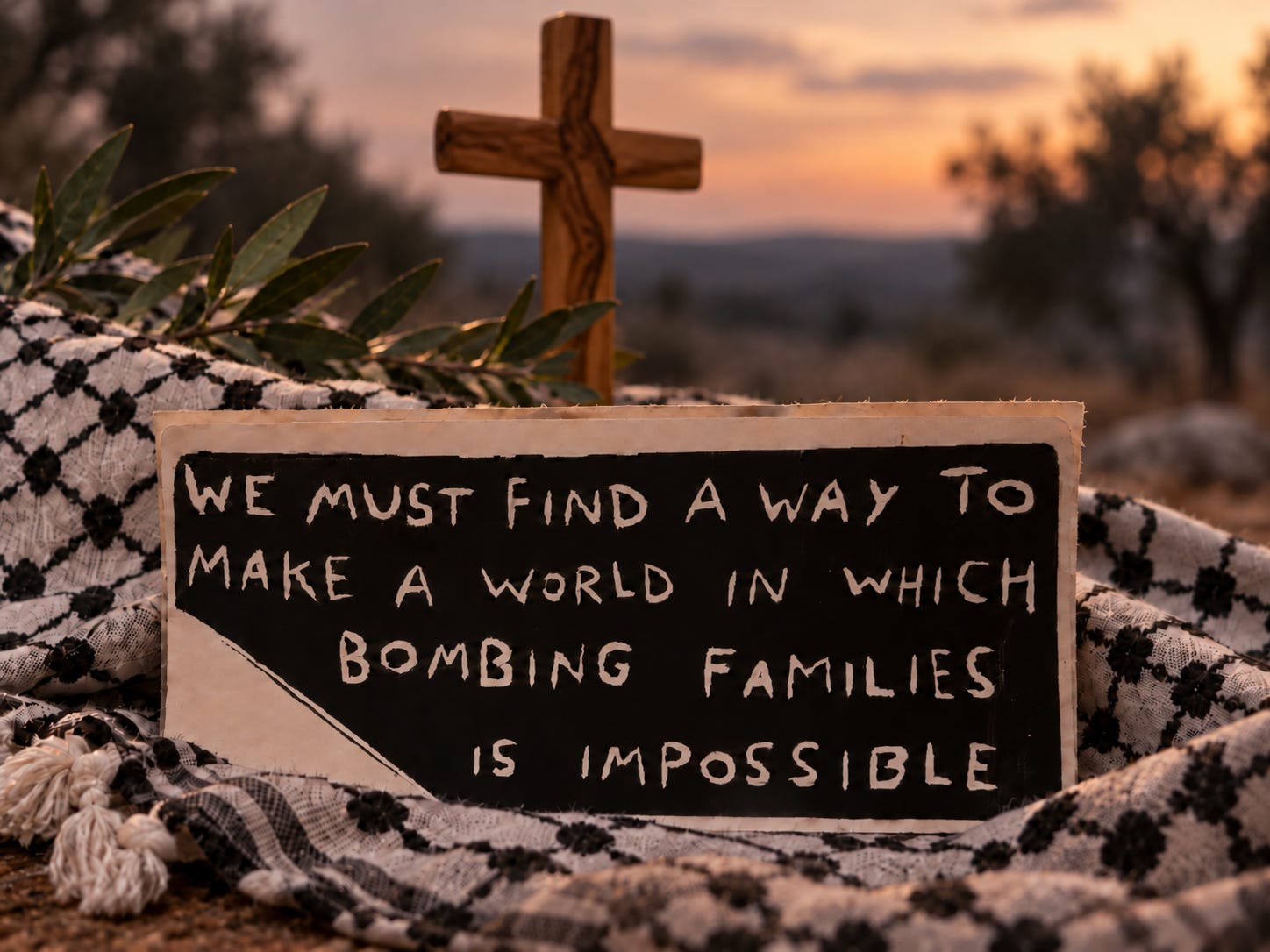
Bearing Witness
My own testimony is that I would bear false witness if I claimed neutrality was the Christ-like response to what I have witnessed in Palestine and Israel. I have visited Palestine numerous times, each time bearing witness to the extraordinary beauty of Palestine and Palestinian culture, as well as the egregious and heartbreaking violence Israel imposes on Palestinians. To diminish or soften these realities would be to bear false witness to what my eyes have seen, my ears have heard, and my heart and soul have encountered.
My own testimony is that I would bear false witness if I claimed neutrality was the Christ-like response to what I have witnessed in Palestine and Israel.
As a professor of Evangelism and Missions, I have also wrestled with the question of Christian neutrality through my study of the history of missions. Throughout history, missionaries have entered societies marked by violence, exploitation, and inequality, often believing that being Christ-like meant remaining neutral, avoiding conflict, and staying outside the political struggles around them.
Yet history offers sobering lessons: in seeking neutrality, Christians have often failed to recognize, name, or confront systems of power that oppress the most vulnerable in their midst. Neutrality1 is itself a position, one with material and deadly consequences for those experiencing injustice. Palestinian Christians have been pleading with the church to recognize this reality for decades.
Many Christians in the U.S. remain unfamiliar with the context of Palestine and Israel, although the ongoing genocide in Gaza has brought greater awareness of the violence Israel imposes on Palestinians. Understanding this context requires more than listening to “competing narratives.” It requires examining power, something Christian missionaries have historically often failed to do, failing to ask: Who holds power, and how is it exercised? Who enjoys freedom, and whose freedom and rights are restricted or denied?
These questions are especially important in the context of Palestine and Israel, where many Christians have never been taught about the enormous imbalance of power that exists. Many are unaware of the extent to which Israel controls and restricts Palestinian freedom of movement, access to land, and imposes conditions that shape every aspect of Palestinian life2. They may know little about the detention of Palestinians, or the indiscriminate killing of Palestinians - all realities represent only a fraction of the inequalities Palestinians have experienced for generations, at least since the 1940s, the early stages of the ongoing Nakba3.
In many Christian communities, Palestine and Israel are two peoples who simply cannot get along. According to these narratives, both have historical grievances and must overcome their mutual hostility before peace can become possible. These narratives obscure the profound imbalance of power between Israel and Palestinians.
When we fail to name this imbalance and abandon neutrality, we treat the experiences of those who exercise power over and those who live under that power as though they were interchangeable.
For many, these realities remain unfamiliar precisely because Palestinian experiences and perspectives are so often absent from narratives in their churches and in public discourse, which is only another testament to the imbalance of power between Palestine and Israel.
As disciples of Jesus, our responsibility is not simply to accept the narratives we have inherited. It is to examine them in light of the gospel, listen to those whose voices have been marginalized, and seek truth with humility and courage.
What About Israeli Lives?
Another concern I often hear is whether naming Palestinian oppression means disregarding Israeli lives and humanity. In public discourse, these assumptions are often used to silence Palestinians in Palestine and the diaspora about their realities. As Christians, we must resist the idea that bearing witness to one people’s suffering diminishes the humanity of another. The gospel reveals a love that extends to all people, affirming the worth and dignity of every human being.
Naming Palestinian oppression does not require denying Israeli humanity. When we listen to Palestinian testimony and accompany Palestinians in their pursuit of freedom and dignity, we are responding to the biblical command to love our neighbors as ourselves. This has been a central appeal of our Palestinian Christian brothers and sisters.
This is also where the question of neutrality becomes especially important. Sometimes, those who claim neutrality are not neutral at all. They grant Israel permissions they would never extend to Palestinians. They overlook or justify Israeli actions while accepting narratives that portray Palestinians as terrorists or as collectively supporting terror. Such “neutrality” is inconsistent and supports the idea that one people’s actions are justified while another’s are condemned. We acknowledge one people’s suffering while explaining away another’s.
Come and See
For those who are only beginning to learn about Palestine and Israel, I invite you to approach this journey as an opportunity to deepen your discipleship. Faithfulness does not require us to cling to familiar narratives. Instead, let us approach difficult questions with curiosity, humility, prayer, and a willingness to encounter truths that may challenge us.
Listen to Palestinians, especially Palestinian Christians, whose voices, histories, and experiences are so often absent from the conversations in our churches and public discourse. Listen to their testimonies of faith. Allow their witness to challenge what you have been taught and expand your understanding of what it means to follow Jesus.
The most important question is not whether we have positioned ourselves between two narratives, but whether we have examined structures of power honestly, and applied our Christian convictions consistently enough to recognize the dignity and suffering of those whose lives are at stake.
When Peter and John were commanded to stop speaking about Jesus, they responded: “As for us, we cannot help speaking about what we have seen and heard” (Acts 4:20). Their words remind us that bearing witness is central to our calling as disciples.
I urge you, friend, invite you, friend: Listen to Palestinian Christians. Visit Palestine. Go and see. Take your questions and concerns. Then, with an open heart, prayerfully discern whether the One who was crucified and rose again is calling you to neutrality…or something else.

Cristal Silva-McCormick
Rev. Dr. Cristal Silva-McCormick is an ordained minister, Assistant Professor of Evangelism and Missions, and Director of Latine Studies at Austin Presbyterian Theological Seminary.
See also this recent podcast interview with Rev. Dr. Munther Isaac: Rev. Munther Isaac: Israeli Occupation, Palestinian Christians, And The Politics of Silence
For a primer about some of this history, specifically, the ongoing Nakba in the history Palestine, see Dr. Yousef Alkhouri’s article https://bethbc.edu/blog/2026/05/14/the-nakba-isnt-only-a-palestinian-experience/.
See also these reports from the Israeli organization B’Tselem from the nineteen nighties, a clear demonstration that Israeli’s violence against Palestinians has been a longstanding reality https://www.btselem.org/publications/summaries/199103_torture

This tame version of Christianity which almost apologetically debates ‘neutrality’ and politely implores Christians to listen to victims of mass-murder and destruction, as being ‘the other side,’ knows nothing of the Christianity of the Bible. John the Baptist lost his head for speaking truth to power. The Lord Jesus said of those trying to silence the masses, “if they keep quiet, the stones will cry out.” The stones of today are the rubble of Gaza and they can be heard loud and clear in the haunting silence of Christian apathy, if not complicity and active support for the atrocities committed by a supposed ‘Israel’ that is by every measure the opposite of everything the Lord Jesus ever did and taught and stood for.
What would Jesus do? I don't think he would remain silent and allow innocents to be killed. We should do likewise.