

“But you are a chosen race, a royal priesthood, a holy nation, a people for his own possession, that you may proclaim the excellencies of him who called you out of darkness into his marvelous light.”
—1 Peter 2:9
Election in the Bible is not privilege over others. It is responsibility toward others. To be chosen is to receive a mission, not preferential status; it is a calling and a task, not a claim to superiority.
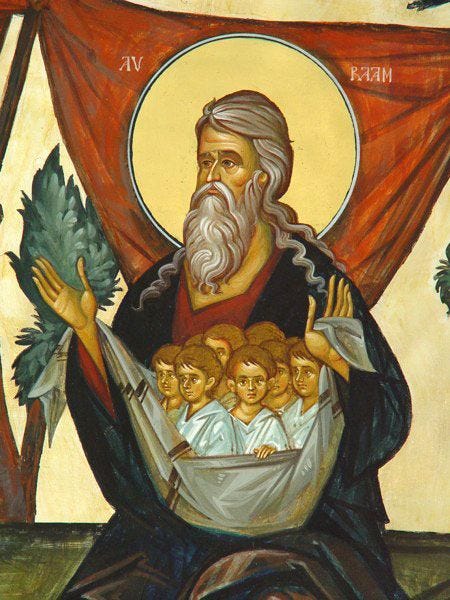
Icon: Bosom of Abraham by Elena Murariu
This is clear from the very beginning of the biblical story.
When God called Abraham, he chose one person—but his purpose was never limited to that one person or his descendants. God promised Abraham that he would become “the father of a multitude of nations” and that through him “all the families of the earth” would be blessed. From the beginning, then, election carried within it a mission that extended beyond Abraham and his descendants to the nations.
The same purpose becomes even clearer in God’s words to Israel:
“You shall be to me a kingdom of priests and a holy nation.” A holy nation is a people set apart and consecrated to God. A kingdom of priests is a people entrusted with God’s mission to the world. This is the purpose of election.
God intended Israel to live differently from the nations around it. This is why the law, the commandments, and the ethical demands of Scripture—and especially its insistence on justice and mercy—matter so deeply. Israel was not meant to be distinguished by ethnic superiority, but by the way it lived: by its relationship with God and its faithfulness to God’s calling.
When Election Is Turned Upside Down
The tragedy begins when we turn the biblical meaning of election on its head.
We do this when we transform a calling to be a blessing to others into a privilege that demands that others bless us.
Instead of asking, How can we serve others? How can we become a blessing to them? we begin to act as though others are obligated to serve us and bless us because God has chosen us.
Election then becomes privilege rather than responsibility. A mission toward the other becomes a demand that the other exist for our benefit.
But biblical election says precisely the opposite.
God does not choose us so that others might become a blessing to us. God chooses us so that we might become a blessing to them.
This is exactly what Peter emphasizes when he draws on the language of the Old Testament to describe the identity of God’s people in Christ:
“A chosen race, a royal priesthood, a holy nation, a people for his own possession.”
But Peter does not stop with the identity of the chosen people. He immediately explains the purpose of their election:
“That you may proclaim the excellencies of him who called you out of darkness into his marvelous light.”
There is always a missionary dimension to election. Election comes with a calling and a responsibility.
God sets apart a people for a purpose: to proclaim his goodness and grace, to bear witness to what God has done, and to embody that grace in the world.
This means that election is never ultimately about ourselves. It is not something we possess so that we can congratulate ourselves on being chosen. It is a calling we receive so that we might live differently, proclaim the grace of God, and become a blessing to others.
Perhaps, then, we have been asking the wrong question.
The most important question is not:
Are we chosen?
The more important question is:
Are we faithful to the mission for which God chose us?
If you want to learn more about the work of the Bethlehem Institute for Peace and Justice, come meet us in person and engage in these crucial conversations about faith, justice, and the Holy Land. Join us at Church at the Crossroads this November in Atlanta or Belfast. We'd love to welcome you.
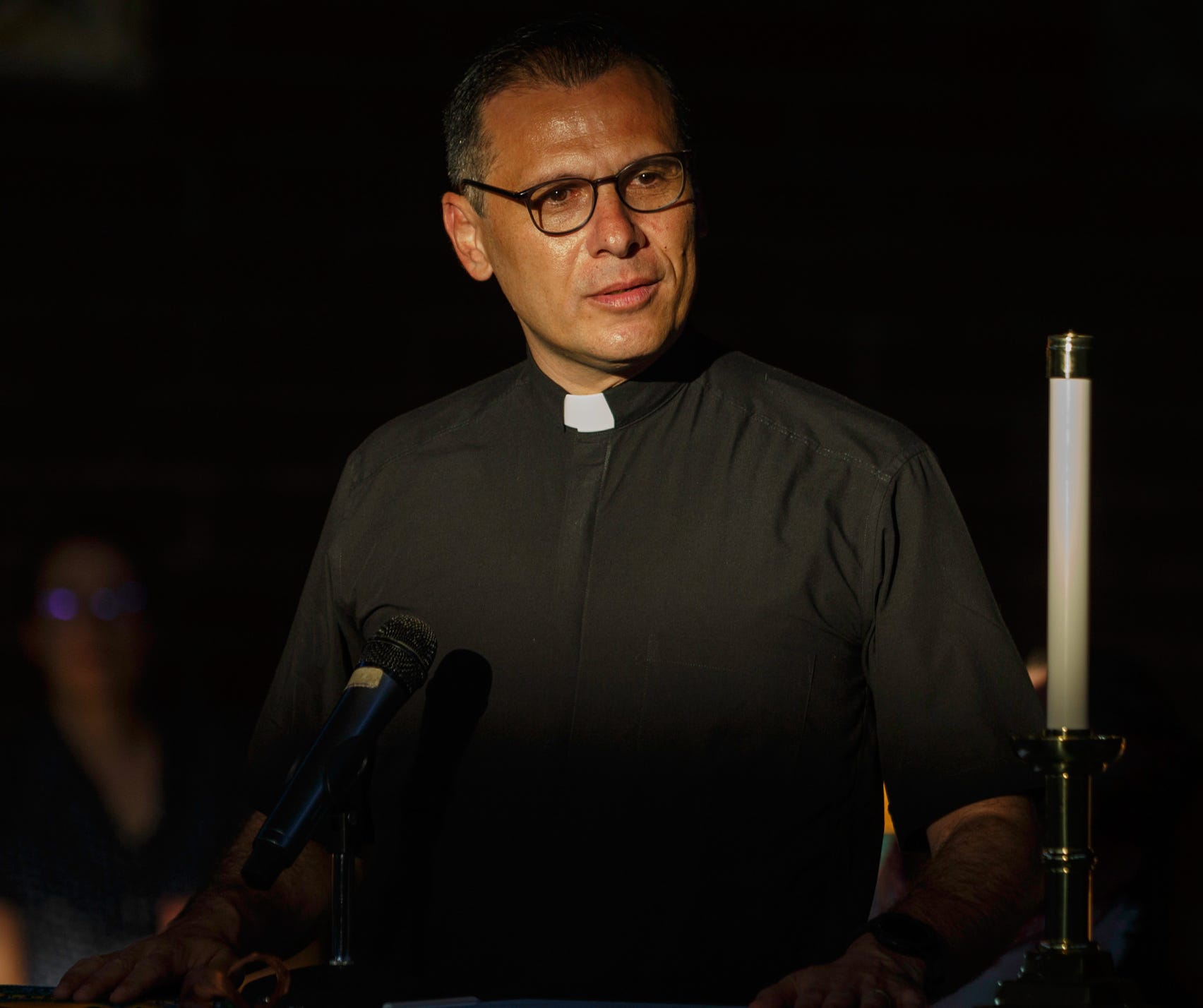
Rev. Munther Isaac
Rev. Dr. Munther Isaac is a Palestinian Christian theologian, Evangelical Lutheran pastor, and Director of the Bethlehem Institute for Peace and Justice. Born and raised in Beit Sahour, just outside Bethlehem, he is the author of The Other Side of the Wall and Christ in the Rubble. His preaching, writing, and scholarship have brought the witness of the Palestinian church to a global audience, challenging the church to recover a gospel rooted in justice, human dignity, and the teachings of Jesus.
Such a beautiful explanation of God’s holy word. You lifted my heart with joy in hearing this loving, inspiring and insightful message of what being chosen by God means. It carries responsibilities born out of love one toward another for God’s glory. Thank you and may Jesus Christ bless you and keep you always. ✝️🙏🏼
Hallelujah powerful, glory be to God. Beautiful explanation and demonstration. God bless you always.