

“A church cannot be merely a place of worship, but must also be a place where the conscience is called to awaken, and the church must learn to allow itself to be disturbed by the pain of the world.” — Pastor Michel Charbonnier
This week, I had the unique opportunity to speak in Torre Pellice, a historic village in northern Italy, rich in history and deeply associated with the Waldensian community—a community that endured severe oppression, persecution, and injustice over the centuries, only to emerge as a community committed to healing and reconciliation.
Today, this very small village of around 4,500 people is home to one of the most memorable expressions of prophetic Christian witness I have encountered.
I was invited to give a talk in the village in the context of the Synod of the Waldensian and Methodist Church, which takes place in Torre Pellice. I spoke to a packed church, a full house of people who came to listen, to learn, and to stand in solidarity.
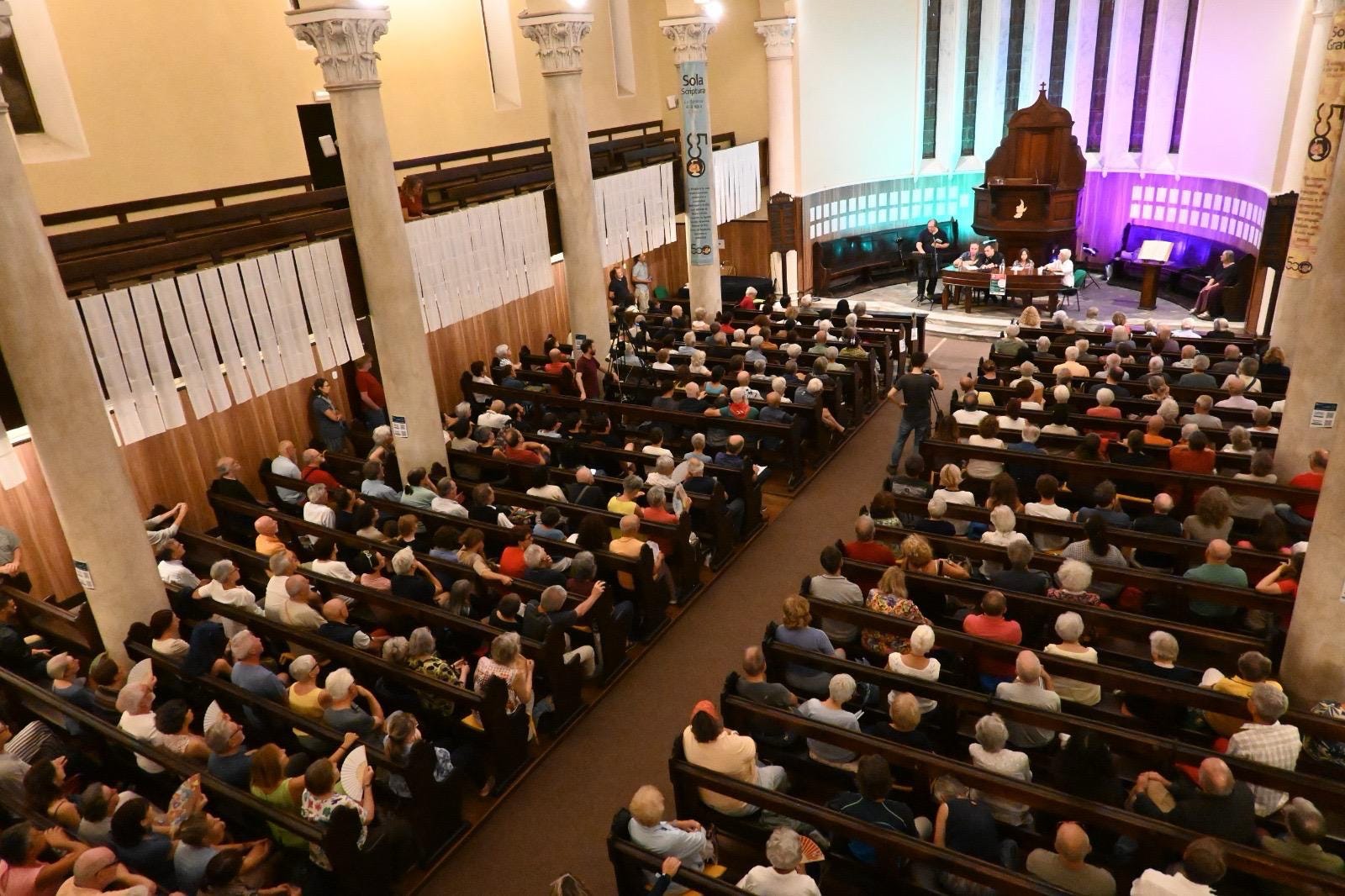
What was truly remarkable was the display I encountered inside the church: thousands of sheets of paper carrying thousands of names of those killed in the genocide in Gaza—a witness of recognition and lament, and a cry for justice.
I was incredibly moved by this display. To be honest, it was the last thing I expected to encounter in such a small and remote village in Italy.
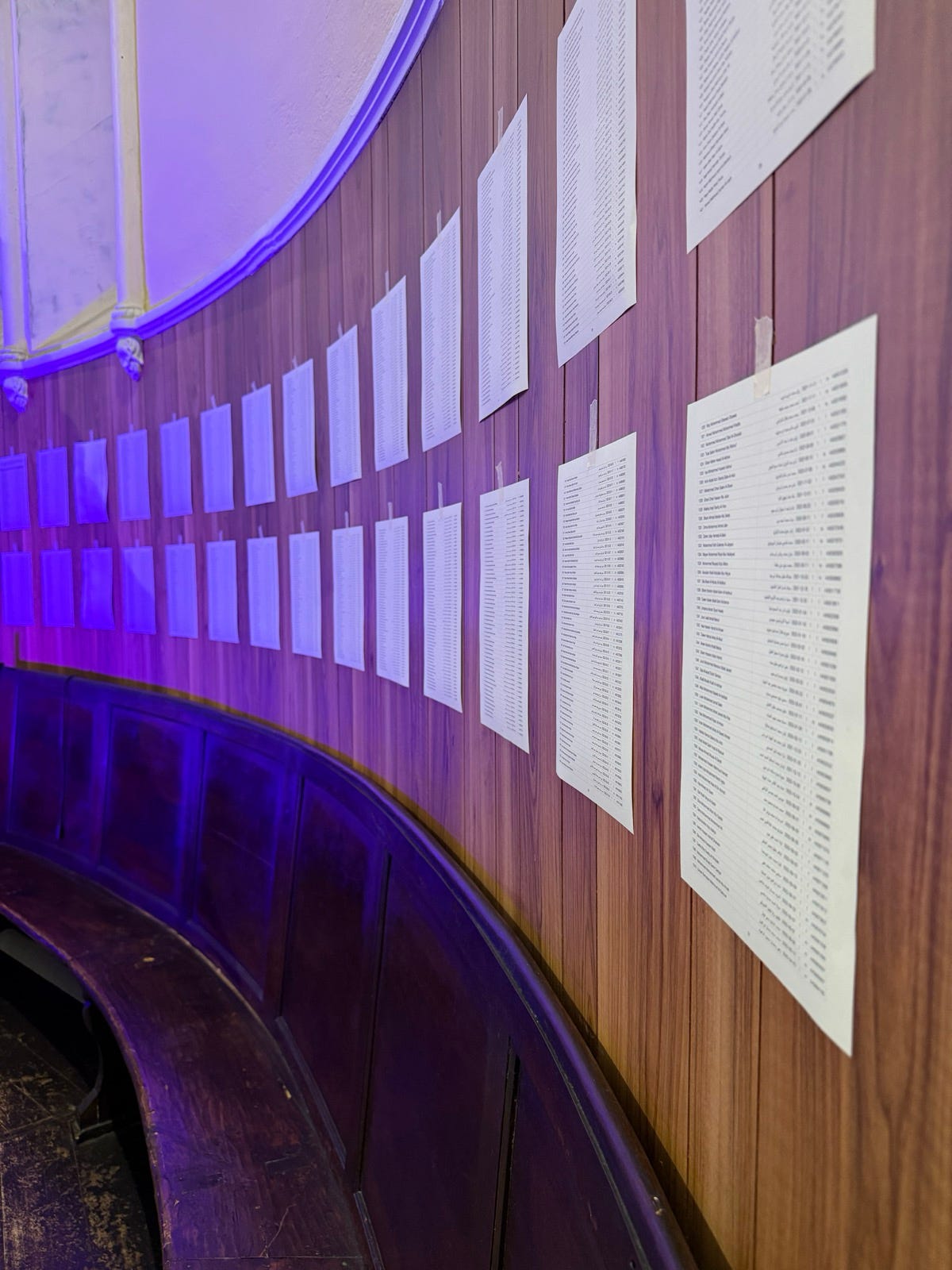
Sheets displaying the names of those killed in the genocide in Gaza
I began my talk with an emotional acknowledgment of the display. It reminded me, at least in part, of what we did in our church in Bethlehem more than two years ago with the Christ in the Rubble manger. Among the many things we wanted to say was this: at a time when we were witnessing the justification and rationalization of the killing of our children, we insisted that we see the image of Christ in every child pulled from under the rubble.
When the world was dehumanizing Palestinians, we insisted on the dignity and worth of every human being, including Palestinians, by wrapping Jesus in a keffiyeh and telling the world: This is the reality in Palestine.
I also remarked that throughout this genocide, I have often been asked: Where is God? Why does God allow this?
My answer has always been that we are not talking about an earthquake or a tornado. This is a human-made tragedy—human beings massacring fellow human beings. The real question, therefore, is not, Where is God? but rather: Where are the good people of the world? Where are the people of faith?
Being in Torre Pellice reminded me that the Church is not always silent. There are those who listen, who care, who lament, and who cry for justice. And they have gone beyond the incredibly moving symbol of placing the names of the people of Gaza inside the church where they worship every Sunday. They have also mobilized, advocated, and given generously for the people of Palestine and Gaza.
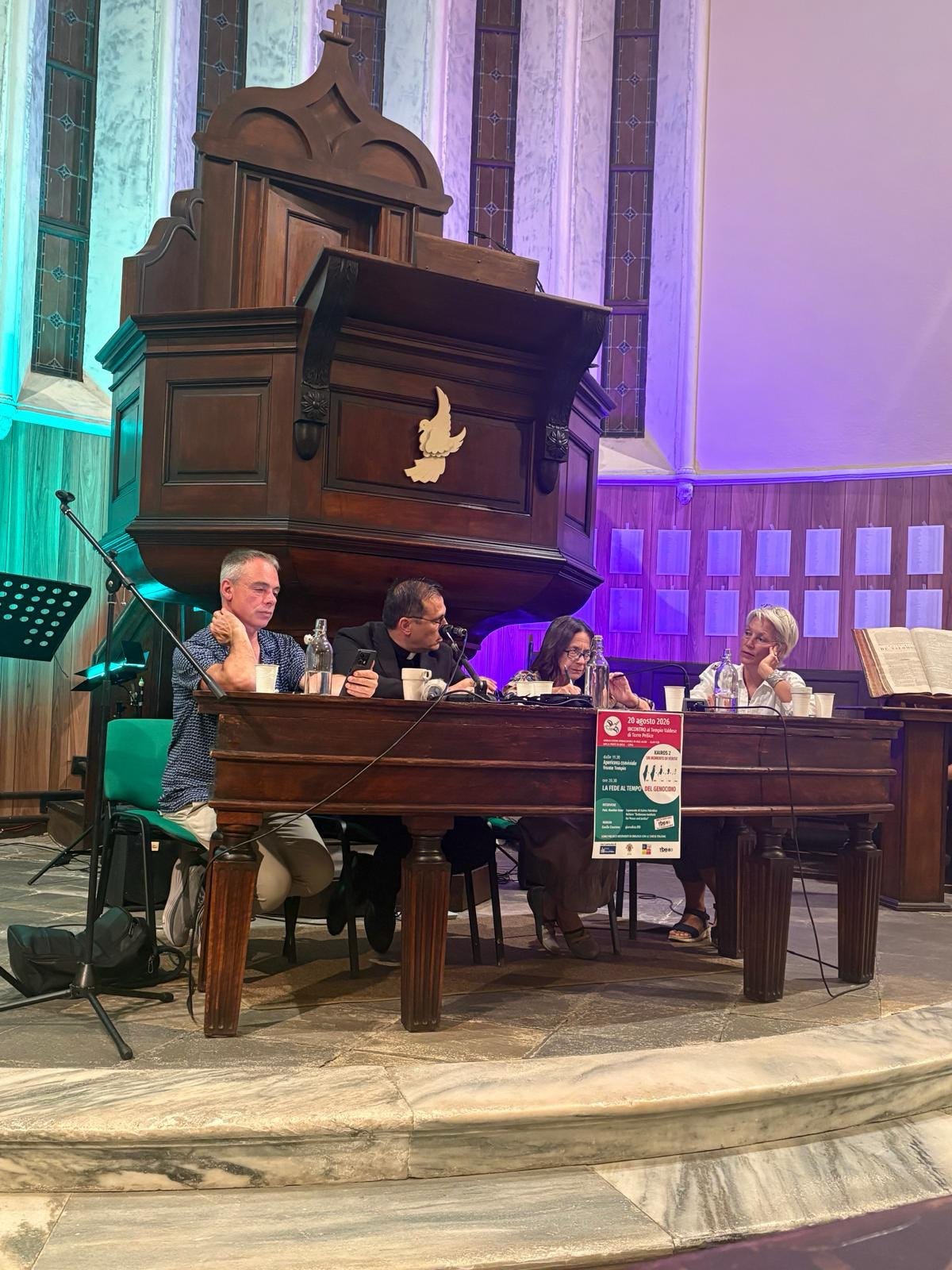
I had the honor of meeting the pastor of the church, Pastor Michael Charbonnier, who gave a brief but profoundly theological introduction to my talk. His words were powerful, and I believe they are worth quoting. If Christians around the world believed and practiced what he said, I truly believe we would be in a much better place today.
He began by explaining why these names belong inside a church:
“A church cannot be merely a place of worship, but must also be a place where the conscience is called to awaken, and the church must learn to allow itself to be disturbed by the pain of the world.”
“This is not an exhibition. It is a way of keeping before our eyes—especially when we gather here in prayer—that which we would so much prefer to pretend not to see.”
He then spoke about why listening to the voice of the oppressed should not be confused with abandoning peace or dialogue:
“This is not a choice against peace, but for true peace. Because there is no peace without justice, there is no reconciliation without reparation… Prayer for peace becomes authentic when it is translated into the defense of the dignity, rights, and freedom of every person.”
And finally, he grounded this witness in Jesus himself:
“Jesus himself was not equidistant. He chose where to stand: on the side of the excluded, the least, the persecuted, and the oppressed. Faithfulness to the Gospel does not ask us to be neutral; it asks us to stand where He stood: on the side of the victims.”
I left Torre Pellice incredibly humbled and grateful for the witness of the Waldensian Church, and especially for the witness of Pastor Michael and the community of Torre Pellice. May this genocide stop. May justice prevail.
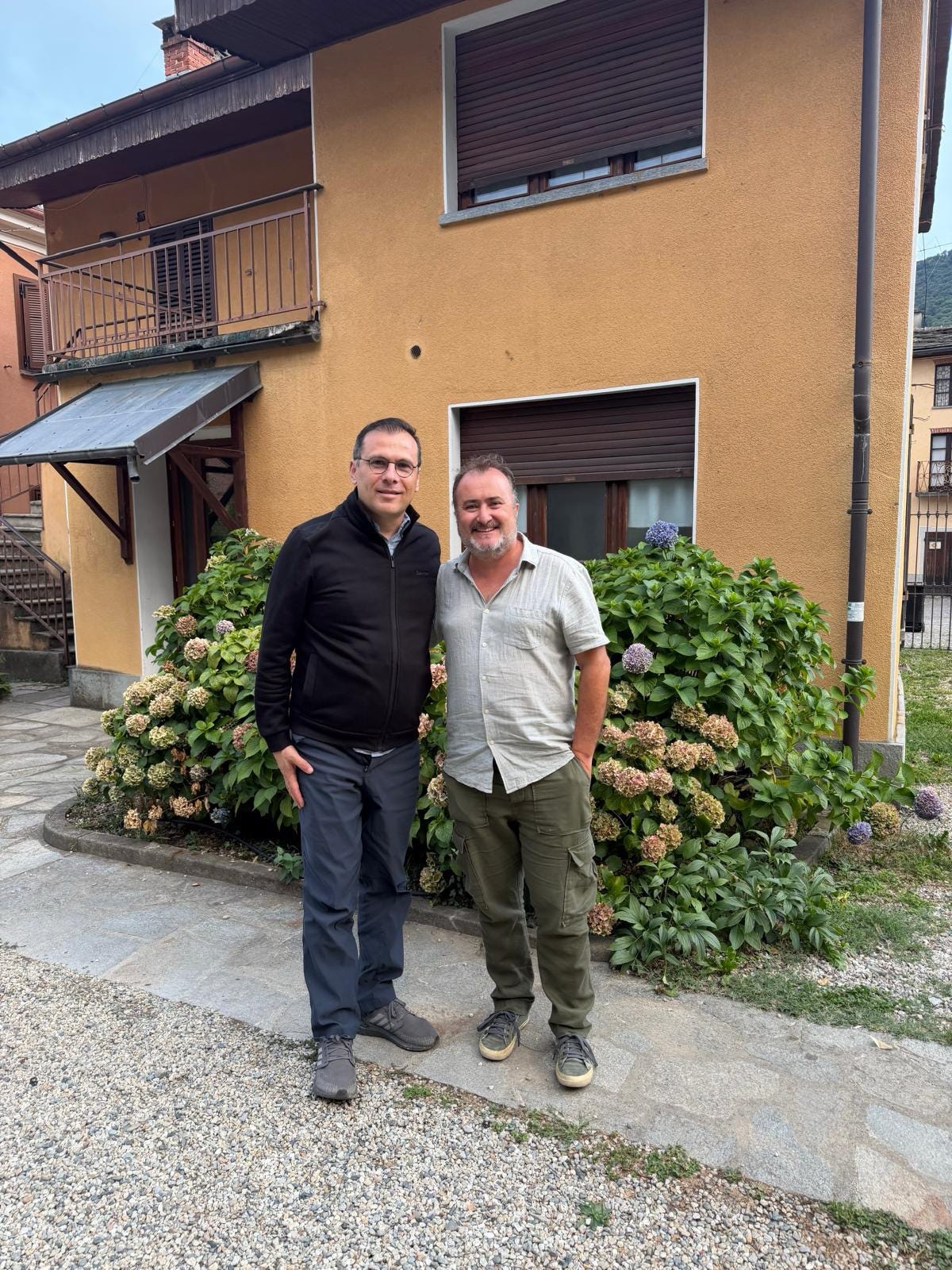
With Pastor Michel Charbonnier
“A church cannot be merely a place of worship, but must also be a place where the conscience is called to awaken, and the church must learn to allow itself to be disturbed by the pain of the world.”
I wish this could be painted in large letters on the wall of EVERY church in the world!
Too many places of worship and I include catholic churches havevremained silent. Our PSC group approached our local churches of many denominations to request if someone could talk or leave information. The only one who was receptive was our local Polish catholic church. It brought to mind Jesusbin the garden at Gethseminy