

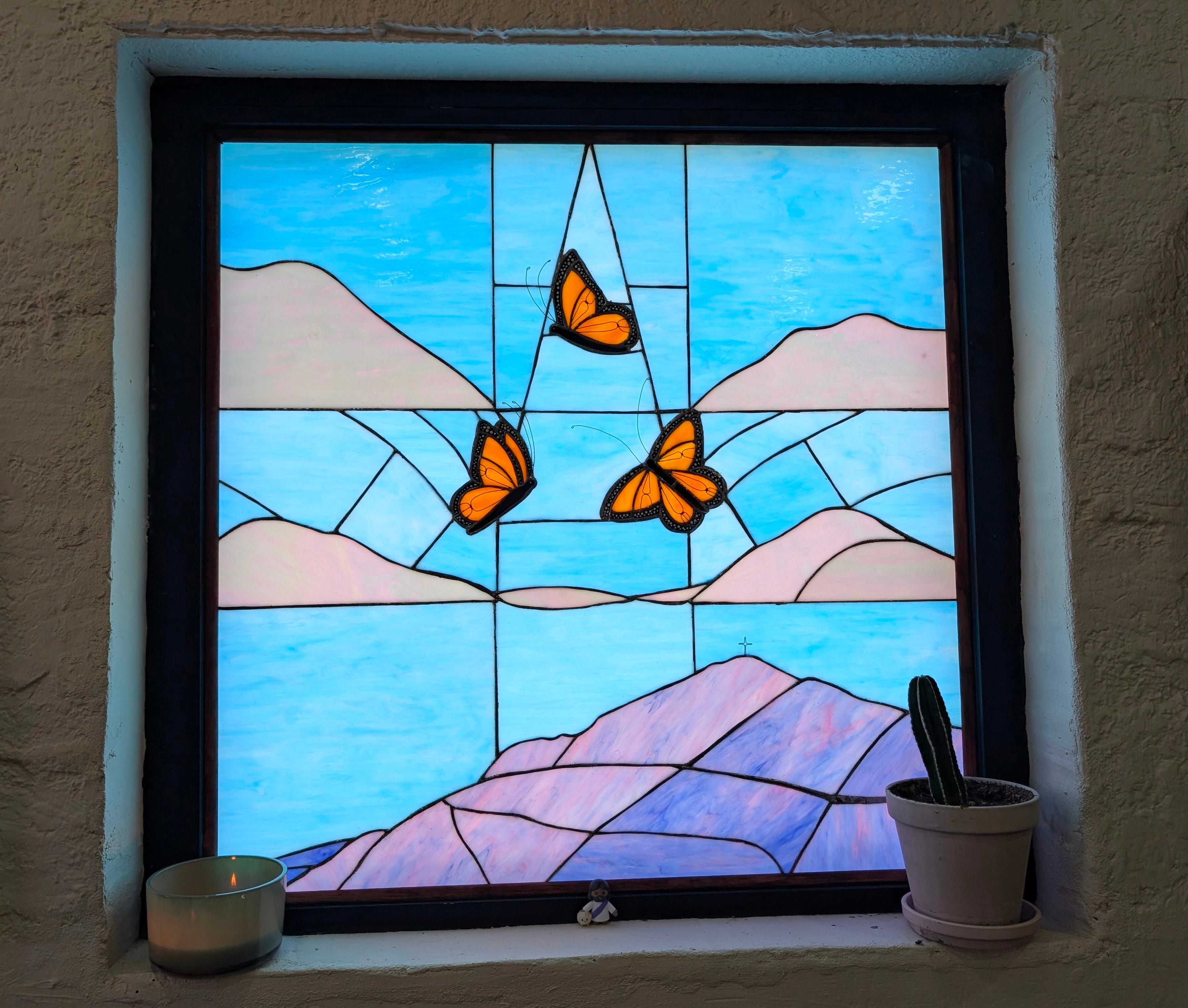
Monarchs in the stained-glass window. Paper monarchs on the wall. Others scattered around the property. I assumed they were meant to evoke metamorphosis. But no.
The staff explained that these decorations are about migration.
You see, every spring, monarch butterflies migrate as many as 3,000 miles from southern Mexico to Canada and the northern United States. But no monarch makes the entire round trip. It takes multiple generations to complete the journey.
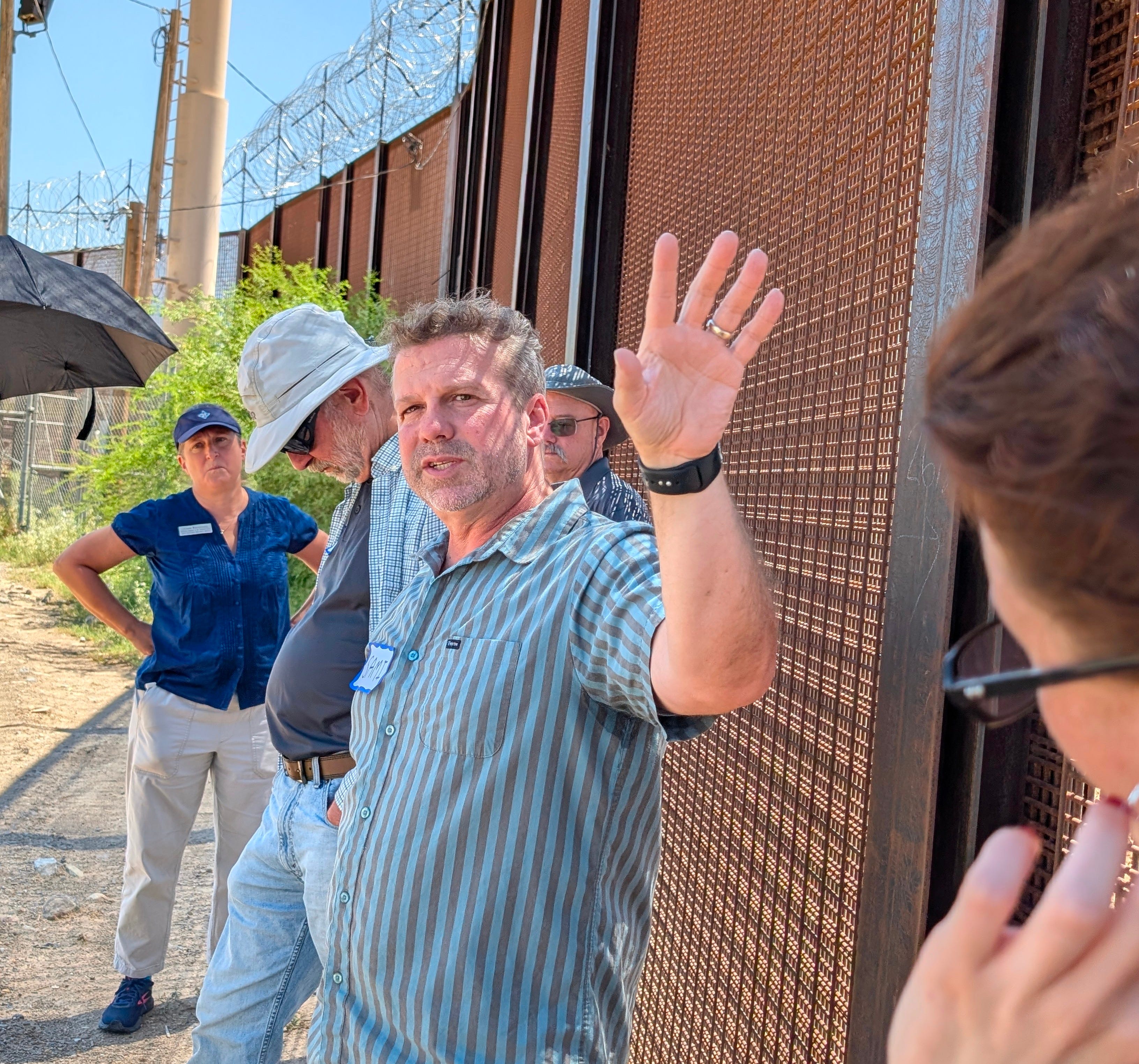
I went to El Paso, Texas last week, with a small group from around the United States to learn more about what we casually call “the southern border.” We met people who live here for many different reasons, heard their stories, and saw the border itself from different perspectives (it is also a “northern border” after all).
El Paso butts up against the border itself, as does Ciudad Juárez on the other side. Or perhaps it is more accurate to say that they butt up against each other, with only the Rio Grande and the wall reminding everyone that there is a border there. There are places along the river where the other side feels intimately close, as if it were just another neighborhood in the same city.
The border is real, to be sure, and has real consequences. As a legal object, it is tied up with laws, citizenship, and access, and it’s marked physically by the Rio Grande and enforced in El Paso with multiple layers of walls, fences, and coils of razor wire. The border can be crossed legally or illegally, easily or with tremendous difficulty. Some find it comforting, while for for others, it represents great danger.
But the border does not erase the relationships that exist across the line.
Families that live on both sides. People who work on one side and live on the other. Parents whose kids cross each morning for school. Young people who seek opportunity on one side and fun on the other side. There are rhythms of life that move back and forth across the river, much like the river itself has shifted its course over time. And of course Monarchs cross the border like it doesn’t exist.
Last week we met people who have core memories on both sides. In some ways, El Paso and Ciudad Juárez are one community, with ties that bind them together in ways they don’t necessarily share with other cities or places—even within their own countries.
I heard a word repeatedly last week: Borderlands.
“Borderlands”—the very term challenges the concept of a border as a line. A line divides. It exists conceptually in a single dimension, forcing a dichotomy. Here or there. In or out. Borderlands, on the other hand, beckons us to see the boarder as having dimensionality, space, and room for community, not merely a line that divides, but a place that connects people with shared experiences.
Living in northern Illinois, I don’t think frequently about this part of the world. It’s distant, and I’m busy. I have a lawn that needs mowing. And yet, I spend a lot of time thinking about another distant place and its people: Palestine.
It’s part of my work with the Bethlehem Institute for Peace & Justice, a Palestinian Christian-led ministry walking alongside the global church toward peace and justice. And Palestine is thousands of miles from my home.
Nevertheless, the week in El Paso/Juárez has reminded me over and again that distance is not the same as disconnection. And just because someone is far away doesn’t mean I’m unrelated to them.
Our group was hosted by Abara House, a ministry in El Paso that walks alongside those who care for migrants to receive people who have arrived at the border for all kinds of reasons.
“Abara” is Arabic for “to cross.” It’s an especially fitting name for this place. Abara House sits at a site of continuous human movement. An ancient Indigenous trail crossed the river where Abara now sits. Later, the Camino Real—the colonial road connecting Mexico City to Santa Fe—followed the same route. For millennia, people have crossed the river at this very spot, tracing lines of human movement and connection across what is now walled and fenced.
Relatively speaking, the current border is a very recent development.
What has struck me most is that the Abara team doesn’t seem to understand its work primarily in terms of solving a problem. There is a commitment here to dignity and to finding joy in the midst of difficulty, Border Joy they call it.
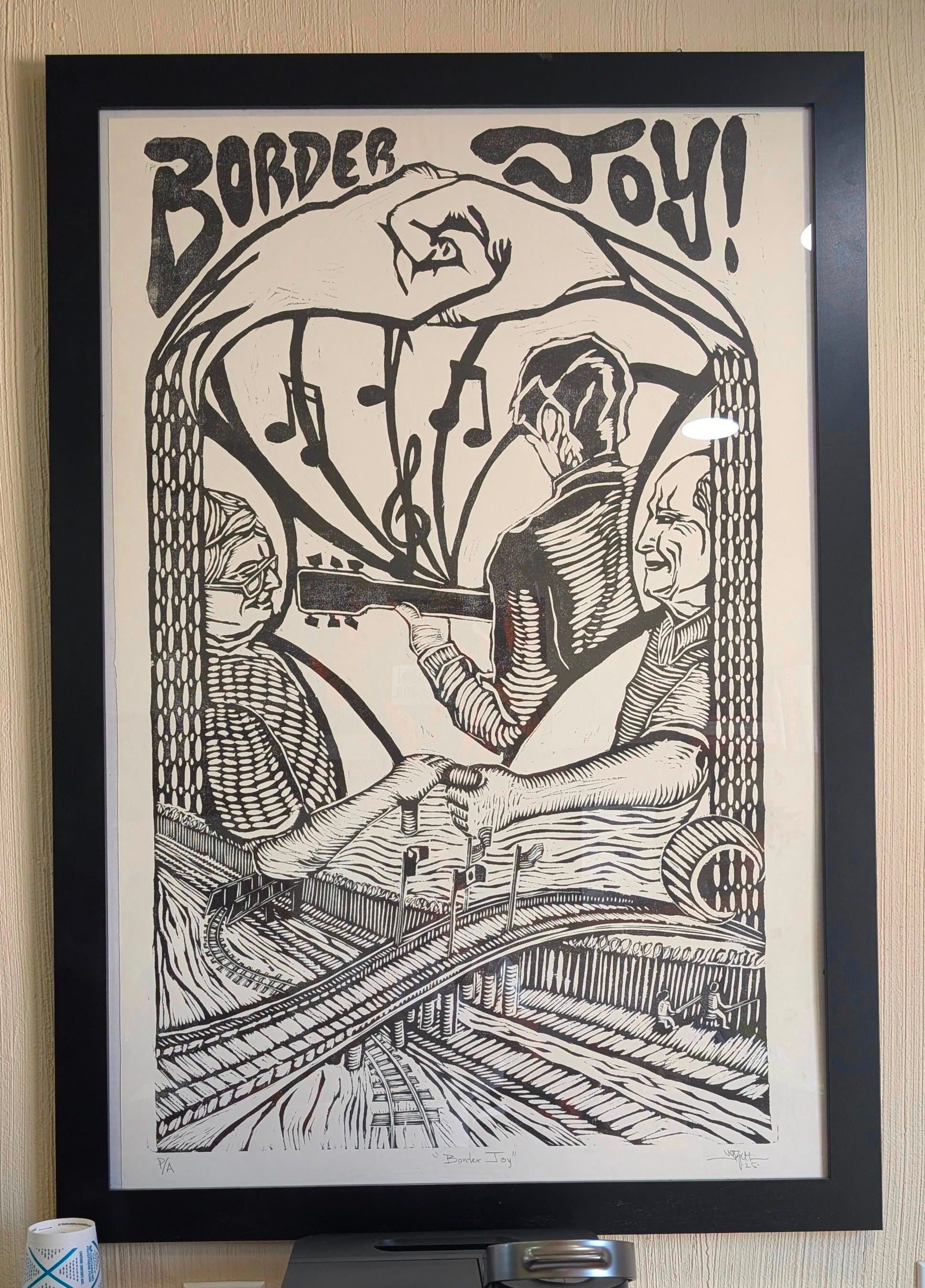
To be sure, Abara tries to help provide food and shelter for those without, but they also sing and dance, take playtime with the children seriously, and have dreams for a park that straddles the border and concerts with musicians and audiences singing to each other and with each other from both sides of the wall. Border Joy!
Perhaps there’s another thing the borderlands community stands for: when we reduce people to the categories attached to a simple border—migrant, citizen, resident, asylum seeker, American, Mexican—we lose view of the person. And we probably lose something in our souls, too.
I keep coming back to the monarchs. No single monarch makes the journey. No solitary butterfly sees the whole migration. Generations participate in something larger than themselves. One life carries the journey a little farther. Then another takes it up, but they’re in it together.
In my North American context, we like to imagine ourselves as independent creatures, making our own journeys through the world. Our culture reinforces this constantly. We have our own lawns to mow!
But that’s not really how human beings work. Our lives are stitched together with the lives of people we’ve never met: the woman from Venezuela I met in Juarez who fled a country deeply impacted by my own. The people ICE abducted in Chicago (my own “back yard”) now languish in Camp East Montana, a massive detention camp in El Paso. The director of Abara who grew up in Jordan, speaks Arabic (now you know why the ministry caries an Arabic word), knows all about my work in Palestine, and showed me around Mexico last week.
Distance can make these kinds of connections harder to see. But it doesn’t make them disappear. Perhaps this is part of what it means to be a Christian in an increasingly atomized world. To resist the temptation to turn people into categories and refuse the idea that someone else’s suffering is someone else’s problem simply because it happened on the other side of a line that’s real-but-not-real.
Jesus’ vision of the world keeps collapsing the boundaries we construct between “us” and “them.” The Samaritan Woman and the Good Samaritan—these Bible stories came up in our conversations last week—are emblematic. With Jesus, the “stranger” is actually our neighbor.
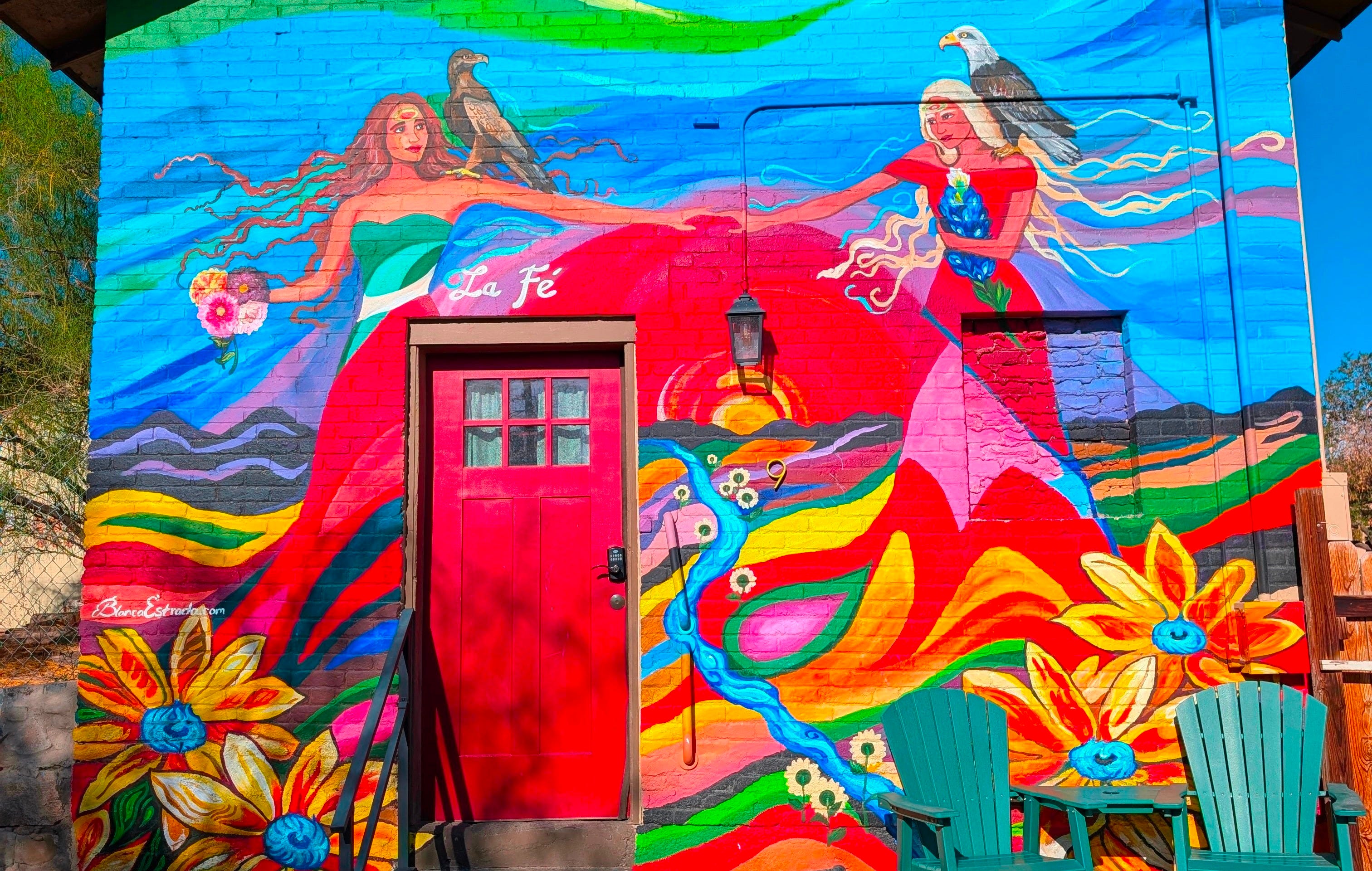
And maybe that’s why I thought about Palestine from El Paso.
In both places, I’ve been confronted with the same temptation in my community: to imagine that what happens “over there” is somehow separate from my life “right here.”
I came to El Paso thinking I would learn more about the border. I am learning that I might need to rethink what a border is. A border can be a lot of things to a lot of people. But a border can also reveal how desperately we want to divide the world into people who belong to us and people who don’t, and then to “manage” the border to enforce the distinction.
Like the monarchs, I saw good people of the borderlands transcending that division, even as many are burdened by it. But they challenge us to think better about it.
When I got home I mowed my lawn. But where my world puts a lot of stock in lines that divide and the power of distance, the lines that connect me to others, even those I don’t know personally, are more important. Jesus sees us as neighbors and responsible to each other. We should too.
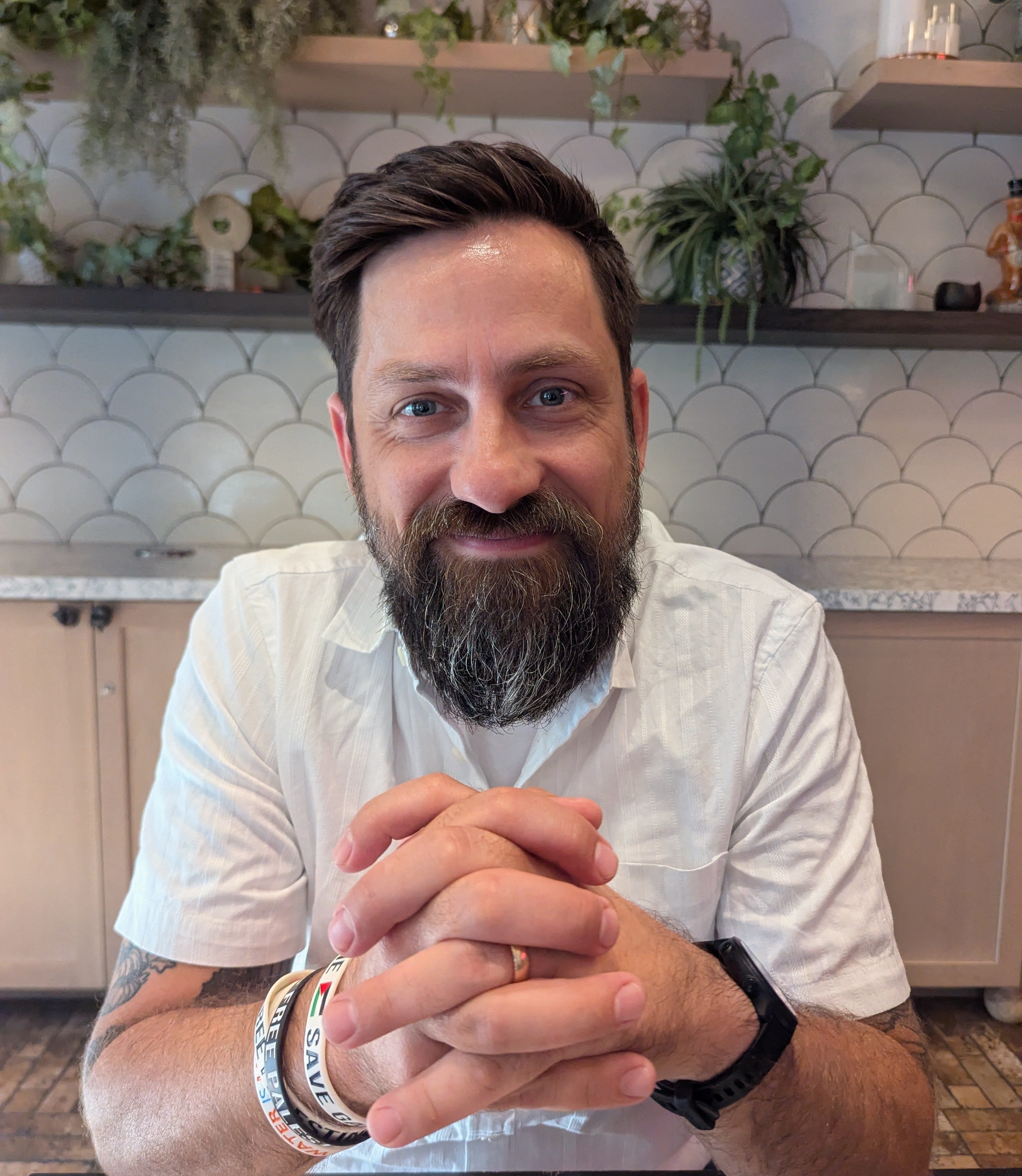
Dr. Ben Norquist is a writer, researcher, and educator exploring the sacredness of place at the intersection of land stories and faith. He serves as Director of Communications & Development at the Bethlehem Institute for Peace & Justice, and brings experience from work with Churches for Middle East Peace, the Network of Evangelicals for the Middle East, and Wheaton College.
His recent book, Every Somewhere Sacred: Rescuing a Theology of Place in the American Imagination (InterVarsity Press, 2026), explores how American Christians imagine and inhabit the places they call home. His writing has appeared in Christianity Today, The Christian Century, Religion News Service, Sojourners, and other publications. Ben lives in Glen Ellyn, Illinois, with his wife and three children.