
When Headlines Distort the Truth
What The Telegraph Got Wrong About My Response

I was recently approached by The Telegraph, a newspaper in the United Kingdom, to comment on the Church of England’s recent decision to receive and engage with Kairos Palestine II, among other Palestinian Christian documents. I was also asked to respond to the criticism directed at the Church by the Board of Deputies of British Jews.
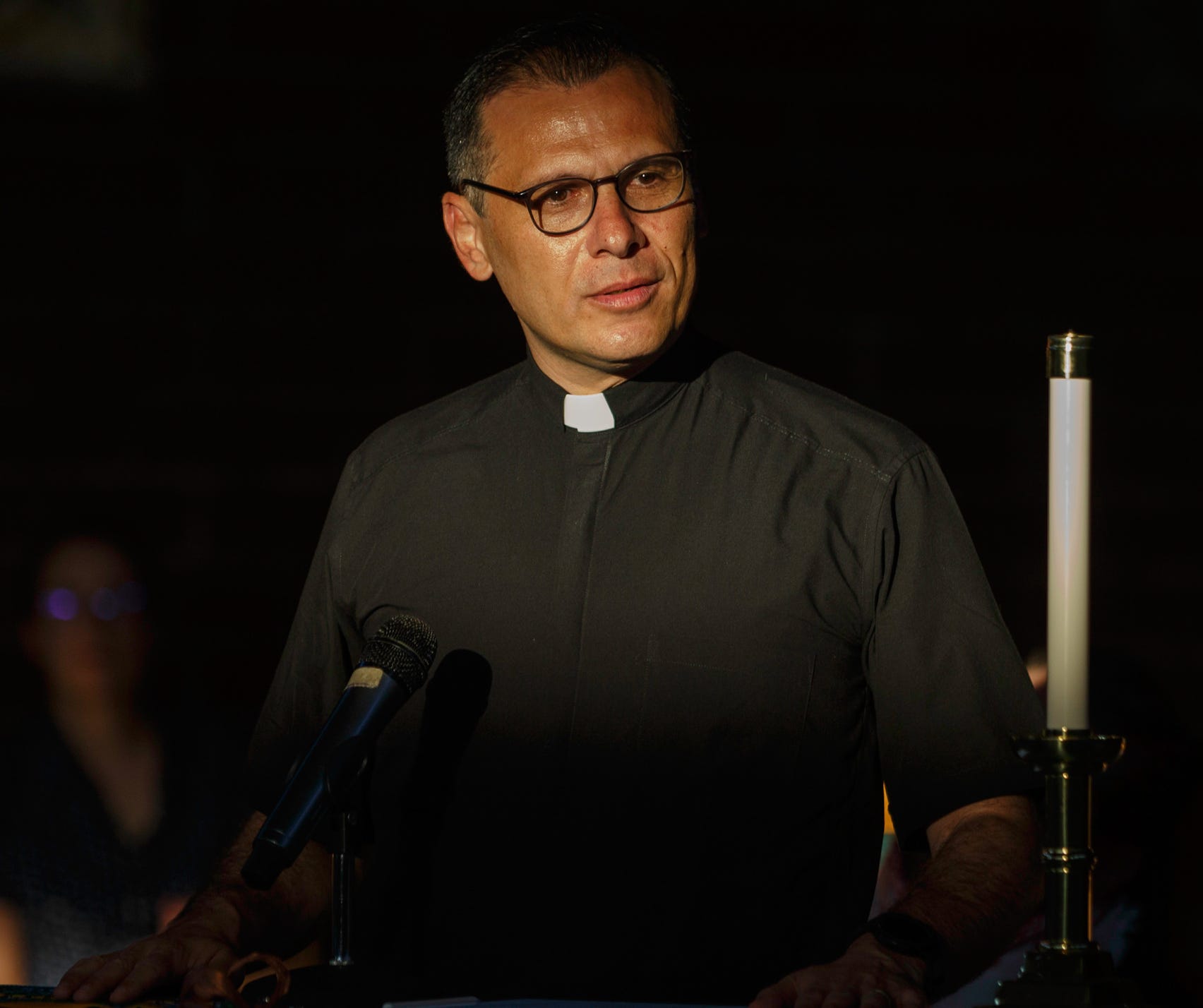
“Rev. Dr. Munther Isaac is Director of the Bethlehem of Institute for Peace and Justice and co-author of Kairos Palestine II.”
I sent the newspaper a detailed response. I would like to share my response here in full. This is exactly what I sent:
“Sadly and shamefully, the Board of Deputies is engaged in a campaign that seeks to delegitimize any criticism of Israel, falling back on old tactics that, I believe, fewer and fewer people are willing to accept: equating criticism of Israel with antisemitism.
What is even more disturbing about the Board’s response is that there seems to be more anger and frustration over the Church of England merely receiving and engaging with the cry of Palestinian Christians than there is over the unfolding tragedy and genocide in Gaza.
The patronizing reference to the ‘pain’of Palestinian Christians also comes across as deeply condescending. We are not simply expressing pain. The reports and findings on the genocide in Gaza are extensive, exhaustive, and detailed, and come from a wide range of respected international, legal, and human rights bodies.
For an organization such as the Board of Deputies to continue to turn a blind eye to these reports, to the facts on the ground, and to the ongoing suffering of Gaza’s children—all while invoking the language of interfaith dialogue—is truly shameful. It is, in fact, complicity in the crimes themselves.
In fact, Kairos Palestine II anticipated precisely this kind of response and engaged it directly. The document explicitly honors the growing number of Jewish voices who oppose the war and confront Zionism from moral, faith-based, and human conviction. We name them as partners in our shared humanity, in the struggle for freedom and human dignity, and in genuine religious and political dialogue.
We also make clear our conviction that, for too many years, such dialogue has been monopolized by Zionists and their allies, with its premises too often built around reinforcing Zionist ideology while silencing Palestinians and their allies. This is why Kairos Palestine II explicitly calls upon the churches to ‘stand with and amplify prophetic Jewish voices that call for justice and truth.’
The Board’s response, sadly, only reinforces the very concern we raised in the document. Rather than engaging seriously with what Palestinian Christians have said, or with the growing number of Jewish voices challenging Israel’s actions and Zionism itself, it once again attempts to police the boundaries of acceptable Christian speech on Palestine.”
Now notice something important. I clearly distinguished between those promoting Zionism and the many Jewish voices working for justice. In fact, I explicitly called on churches to listen to and amplify those Jewish voices. That distinction was not incidental—it was central to my response.
So what did The Telegraph do with it? It published the following headline: “British Jews complicit in Israel crimes, say Palestinian Christians.”
That is simply not what I said. It is not what Kairos Palestine II says. It is not what Palestinian Christians are saying.
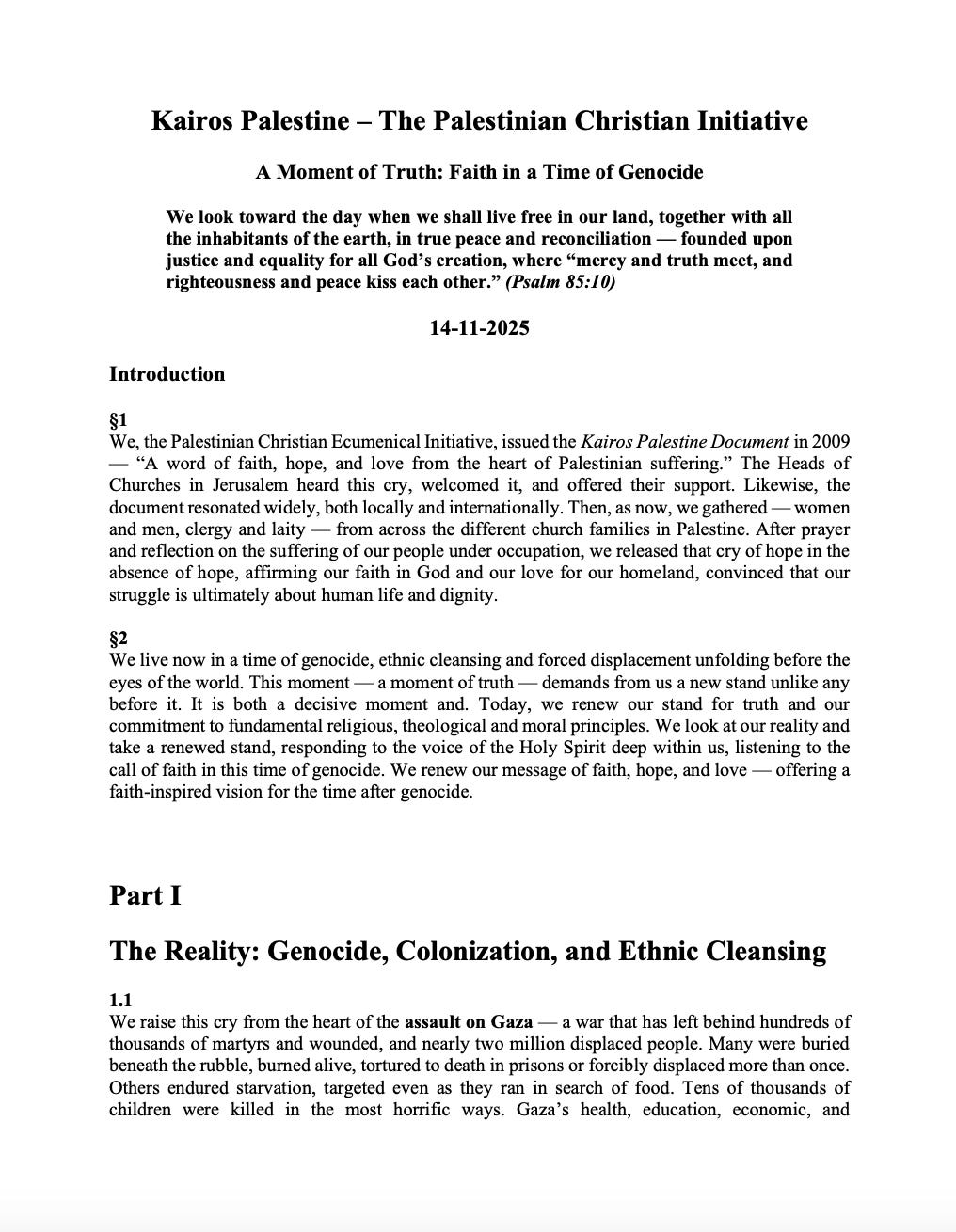
Excerpt from the Kairos II paper.
The headline is incredibly misleading. It completely reverses the point I was making. Rather than highlighting my explicit distinction between Zionist organizations and Jewish partners in justice, it collapses that distinction and leaves readers with the false impression that I accused British Jews collectively of complicity in Israel’s crimes.
This is precisely the kind of framing that has made speaking about Palestine so difficult for so many years. It is not only manipulative; it fuels the false narrative that criticism of Israel is criticism of Jews.
Our position has been clear and consistent. The problem is not Jews. The problem is not Judaism. The problem is support for oppression, occupation, apartheid, and now genocide—whether that support comes from Jews, Christians, Muslims, or anyone else.
Likewise, those standing for justice include Jews, Christians, Muslims, and people of no faith. As I said in my response, and as Kairos Palestine II explicitly affirms, we welcome and encourage partnership with Jewish voices committed to truth and justice.
Perhaps most troubling of all, this kind of reporting distracts attention from the real issue. Instead of engaging with the catastrophe unfolding in Gaza, or with the overwhelming evidence presented by international legal, human rights, and medical bodies, the conversation is redirected toward a manufactured controversy.
The Telegraph should be ashamed of publishing a headline that so fundamentally misrepresented what I actually wrote.
That is deeply regrettable. But it will not deter us. If anything, it only strengthens our resolve to continue speaking the truth, advocating for justice, and insisting that this is not a religious conflict. Our struggle is not against Jews; it is against injustice. And we will continue to stand alongside all—Jews, Christians, Muslims, and others—who refuse to be silent in the face of oppression.
The Telegraphis a noted apologist for the genocidal state. It is not an objective independent voice on the topics related to zionism
Mainstream media are part of the problem and have been and are constantly shaping and distorting the narrative with regard to Palestine 🇵🇸